في المقال السابق، تساءلتُ إن كان الفن يعيد تشكيل الفنان. ومع الوقت، بدأت ألاحظ أن الإجابة قد لا تظهر دائمًا في الأشياء الكبيرة والواضحة، بل ربما تختبئ في التفاصيل الصغيرة التي تتكرر في أعمالنا دون أن نخطط لها. شكل يظهر مرة، ثم يعود مرة أخرى. لون ننجذب إليه باستمرار. أو طريقة معينة في بناء اللوحة نجد أنفسنا نكررها دون أن نكون قد قررنا ذلك مسبقًا. أحيانًا لا نلاحظ هذه الأشياء إلا بعد أن تتكرر بما يكفي حتى تفرض نفسها علينا.
In my previous article, I asked whether art reshapes the artist. Over time, I started to notice that the answer may not always appear in the obvious or significant things, but in the small details that quietly repeat themselves in our work without us planning them. A shape appears once, then comes back again. A color keeps drawing us in. Or a certain way of building a painting begins to repeat itself without us ever consciously deciding to do so. Sometimes, we only notice these things after they happen often enough to make themselves impossible to ignore.
عندما تبدأ اللوحة بتكرار نفسها
When the Painting Starts Repeating Itself
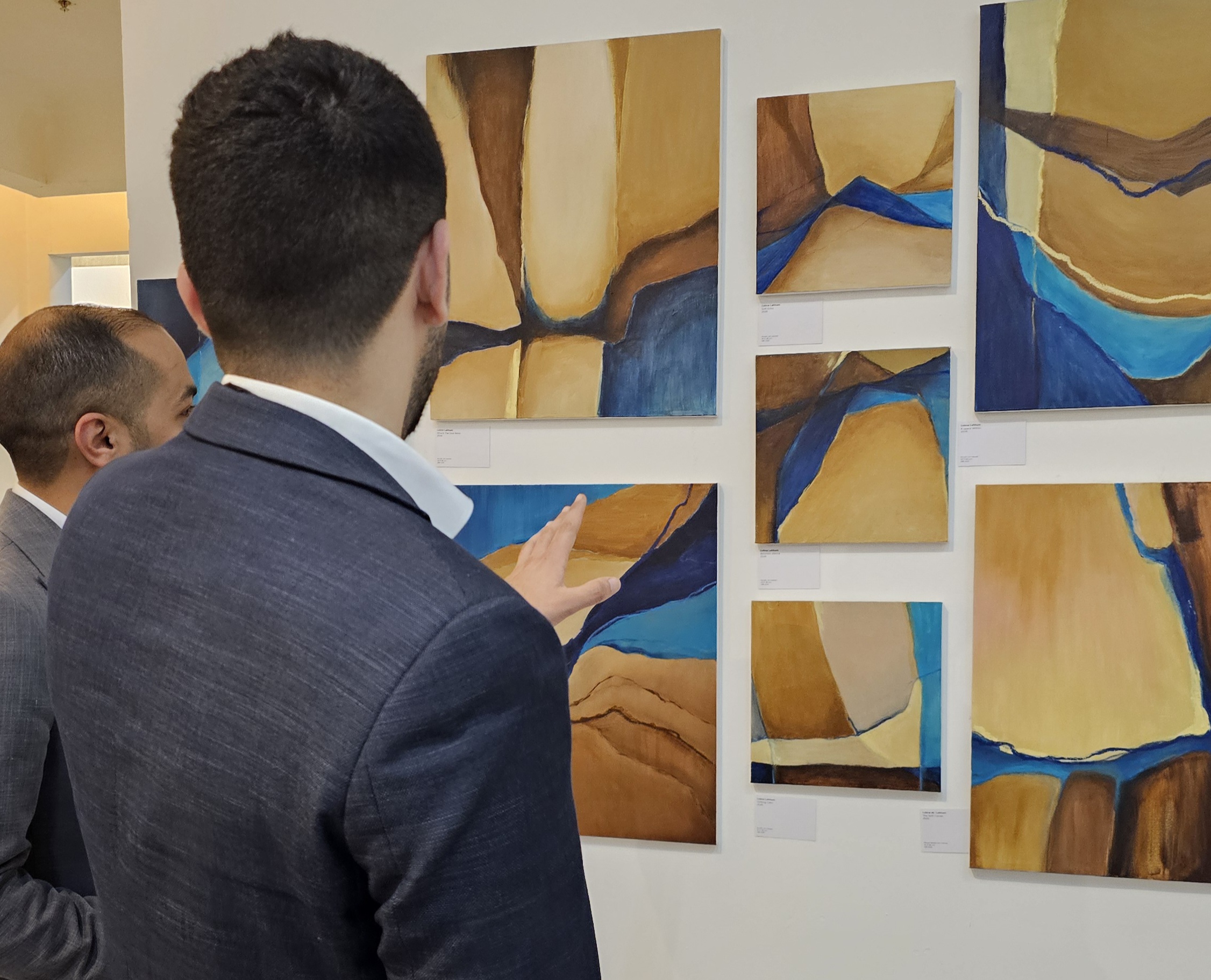
في الفترة الأخيرة، وبينما كنت أعمل على مجموعة جديدة لم أطلقها بعد، بدأت ألاحظ شيئًا لم أكن أبحث عنه أصلًا. كانت هناك أشكال تتكرر في اللوحات؛ أشكال عضوية تميل قليلًا نحو الهندسية، وبعضها يشبه المربعات والمستطيلات، لكن من دون أن تكون هندسية بشكل صارم. في اللوحة الأولى والثانية، ظننت أنها مجرد أشكال عشوائية ظهرت أثناء العمل، ولم أفكر فيها كثيرًا. لكن بعد عدة لوحات، بدأت ألاحظ أنها تعود من جديد، وبطريقة متكررة. عندها أدركت أن الأمر لم يعد مجرد صدفة.
Recently, while working on a new collection that I have not released yet, I started noticing something I was not consciously looking for. Certain shapes were appearing again and again in the paintings. They were organic forms with a slight tendency toward geometry, some resembling squares and rectangles without being strictly geometric. In the first and second paintings, I thought they were simply random shapes that had appeared during the process, so I did not think much of them. But after several paintings, I noticed them returning again and again. That was when I realized it was no longer just a coincidence.
لم أكن قد قررت أن أستخدم هذه الأشكال. لم أجلس أمام القماش وأقل لنفسي إنني أريد أن أكرر المربعات أو المستطيلات في هذه المجموعة. هي فقط كانت تظهر، وكأنها تفرض نفسها على اللوحة وعليّ في الوقت نفسه. وهذا ما جعلني أتساءل: كم من الأشياء التي تظهر في أعمالنا تكون فعلًا قرارات واعية؟ وكم منها يأتي من مكان أعمق في داخلنا، مكان لا نستطيع دائمًا الوصول إليه بالكلمات؟
I had never decided to use these shapes. I did not sit in front of the canvas thinking that I wanted to repeat squares or rectangles throughout this collection. They simply appeared, almost as if they were imposing themselves on both the painting and on me. It made me wonder: how many of the things that appear in our work are truly conscious decisions? And how many come from somewhere deeper within us, somewhere we cannot always reach through words?
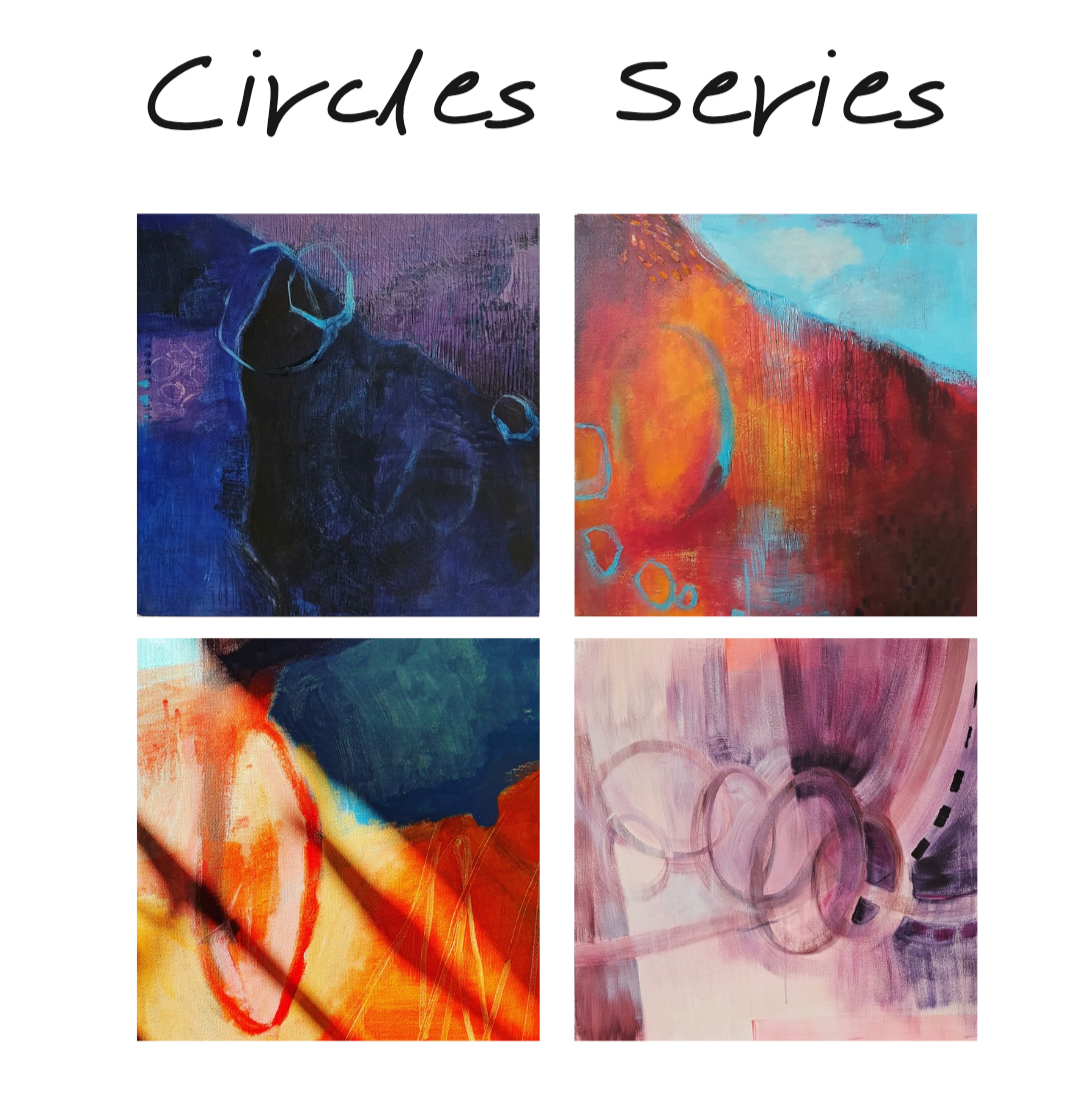
حدث معي شيء مشابه في وقت سابق مع الدوائر. سيطرت الدوائر على مجموعة كاملة من أعمالي إلى درجة أنني أطلقت عليها اسم Circle Series. كان هناك مفهوم واضح وراء هذه الأعمال، بالتأكيد، لكن تكرار الدائرة نفسه أصبح جزءًا أساسيًا من لغتها البصرية. واليوم، وأنا ألاحظ أشكالًا مختلفة تمامًا تتكرر في المجموعة الجديدة، أجد نفسي أفكر في الفكرة ذاتها من جديد: ربما نستطيع أن نكتشف ما يشغلنا من خلال الأشياء التي لا نستطيع التوقف عن رسمها، حتى قبل أن نفهم لماذا نرسمها.
Something similar happened to me earlier with circles. They became so dominant throughout an entire body of work that I eventually named it the Circle Series. There was certainly a concept behind those paintings, but the repetition of the circle itself became an essential part of their visual language. Now, as I notice completely different shapes appearing repeatedly in this new collection, I find myself thinking about the same idea again: perhaps we can discover what occupies our minds through the things we simply cannot stop painting, even before we understand why we are drawn to them.
اللون كمرآة للحالة الداخلية
Color as a Reflection of Our Inner State
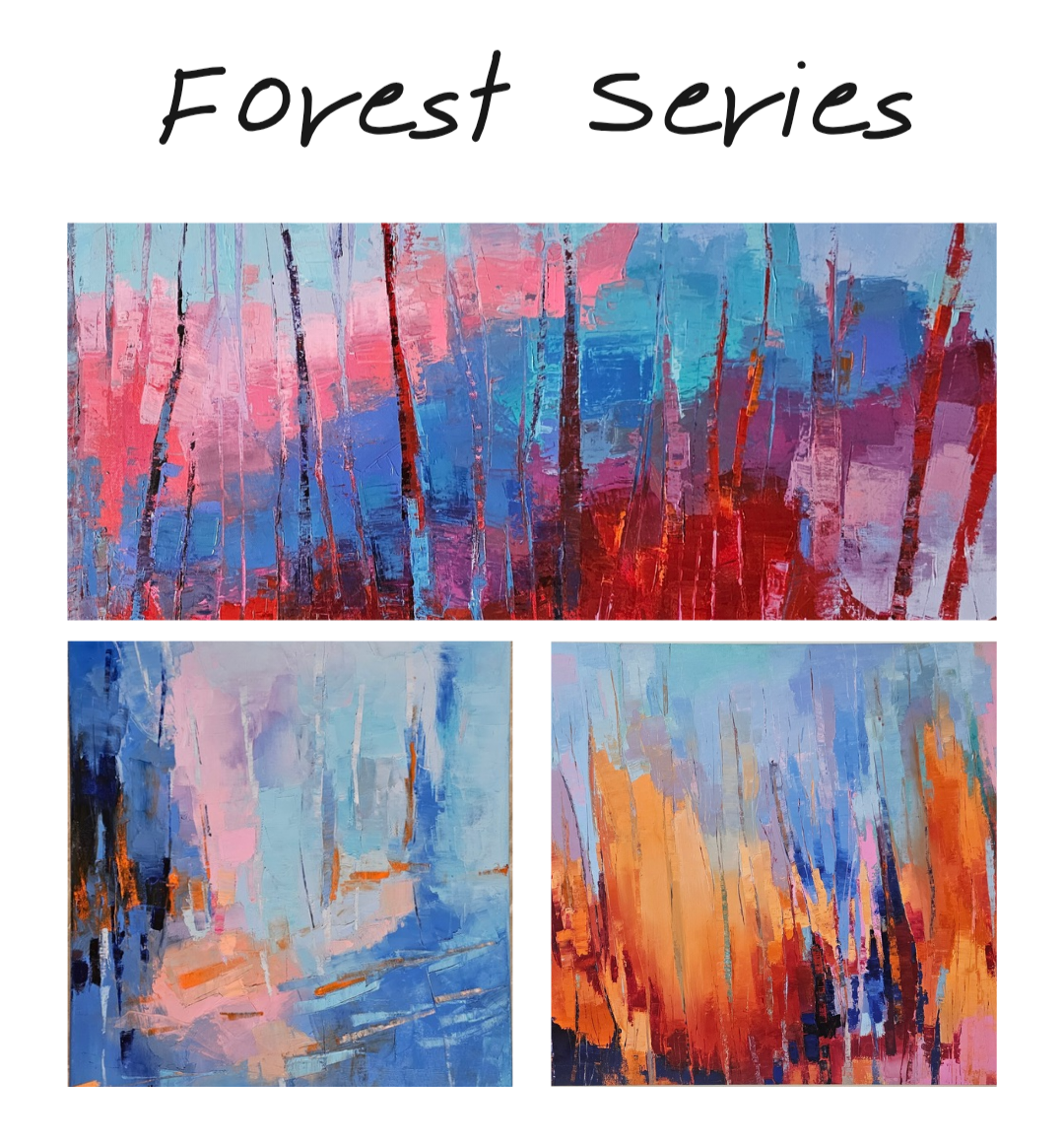
الأمر نفسه حدث معي مع اللون. عندما أنظر اليوم إلى The Forest Collection، أستطيع أن أرى كيف كانت الألوان مرتبطة بالحالة التي كنت أعيشها في ذلك الوقت. كنت أميل إلى الألوان القوية والصريحة، إلى الـ vibrant colors التي لا تحاول أن تختبئ. الأحمر كان أحمر، والبرتقالي كان برتقاليًا، والأزرق كان أزرق. كانت الألوان حاضرة بقوة وواضحة ومباشرة. أما الألوان التي كنت أشعر أنني أتنقل داخل درجاتها أكثر، فكانت الأزرق والبنفسجي.
Something similar happened with color. When I look at The Forest Collection today, I can see how closely the colors were connected to the state of mind I was in at the time. I was drawn to strong, vivid colors that did not try to hide. Red was red, orange was orange, and blue was blue. The colors were bold, clear, and direct. The colors I felt myself exploring through different shades were mainly blue and violet.
في ذلك الوقت، لم أكن أفكر بالضرورة في اللون بهذه الطريقة. كنت فقط أستخدم الألوان التي شعرت أنها مناسبة للعمل، أو ربما الألوان التي كنت أرغب في رؤيتها على القماش. لكن عندما أنظر إليها الآن من مسافة زمنية، أستطيع أن أرى شيئًا لم أكن أراه بالوضوح نفسه أثناء الرسم. وهذا يجعلني أتساءل: هل نختار ألوان لوحاتنا فعلًا، أم أن حالتنا الداخلية تقودنا إليها قبل أن نكون واعين لذلك؟
At the time, I was not necessarily thinking about color in this way. I was simply using the colors that felt right for the work, or perhaps the colors I wanted to see on the canvas. But when I look at those paintings now, with some distance in time, I can see something I could not see as clearly while I was making them. And it makes me wonder: do we really choose the colors of our paintings, or does our inner state lead us toward them before we are even aware of it?
اللوحة التي نفهمها بعد أن تنتهي
The Painting We Understand Only After It Is Finished
ربما أكثر ما يجعلني أشعر بأن الفن بالنسبة لي هو عملية اكتشاف، وليس مجرد عملية تنفيذ، هو أنني غالبًا لا أفهم أعمالي إلا بعد أن تنتهي. خصوصًا عندما أعمل على التجريد، لا أبدأ دائمًا وأنا أعرف إلى أين ستذهب اللوحة. لا أملك صورة نهائية واضحة في رأسي وأحاول فقط نقلها إلى القماش. العملية نفسها هي التي تقودني. لون يقود إلى لون، وشكل يفتح مساحة لشكل آخر، وطبقة تستدعي طبقة. أحيانًا أضيف شيئًا ثم أشعر أنني بحاجة إلى إزالته، وفي أحيان أخرى أجد أن ما كنت أعتقد أنه خطأ هو بالضبط ما تحتاجه اللوحة.
One of the things that makes me feel that art is a process of discovery, rather than simply a process of execution, is that I often do not understand my work until it is finished. This is especially true when I work with abstraction. I do not always begin a painting knowing where it will go. I do not have a clear final image in my mind that I am simply trying to transfer onto the canvas. The process itself guides me. One color leads to another, one shape creates space for the next, and one layer calls for another. Sometimes I add something and then feel the need to remove it. Other times, what I first think is a mistake turns out to be exactly what the painting needs.
ولهذا، عندما تنتهي اللوحة، أستطيع للمرة الأولى أن أقف أمامها وأراها من الخارج. عندها قد ألاحظ شكلًا تكرر أكثر مما كنت أدرك، أو علاقة بين ألوان لم أكن أفكر فيها، أو أشعر أن اللوحة تحمل حالة معينة كنت أعيشها دون أن أعرف كيف أسميها. ربما لهذا السبب لا أعتقد أن الفنان يكون دائمًا الشخص الذي يعرف إلى أين ستذهب اللوحة. أحيانًا يكون الفنان هو الشخص الذي يعرف فقط متى وصلت اللوحة.
That is why, once a painting is finished, I can finally step back and see it from the outside. I may notice a shape that appeared more often than I realized, a relationship between colors that I was never consciously thinking about, or a feeling that the painting carries—something I may have been experiencing without knowing how to name it. Perhaps that is why I do not think the artist is always the person who knows where the painting is going. Sometimes, the artist is simply the person who knows when the painting has arrived.
الاستوديو كمكان لاكتشاف الذات
The Studio as a Place of Self-Discovery
لهذا السبب، الاستوديو بالنسبة لي ليس فقط المكان الذي أصنع فيه لوحاتي. هو مساحة أكتشف فيها ذاتي وتجربتي، وأغوص فيها في العملية دون أن أعرف مسبقًا ماذا سأجد. أدخل أحيانًا وأنا أظن أنني سأرسم شيئًا معينًا، ثم أخرج وقد اكتشفت شيئًا آخر تمامًا. وربما هذا هو أحد أجمل الأشياء في الفن: أننا لا نستخدمه فقط لنقول ما نعرفه عن أنفسنا، بل أحيانًا نستخدمه لاكتشاف ما لا نعرفه بعد.
This is why the studio is not simply the place where I make my paintings. It is a space where I discover myself and my experience, where I can immerse myself in the process without knowing exactly what I will find. Sometimes I enter the studio thinking I am going to paint one thing, and I leave having discovered something completely different. Perhaps this is one of the most beautiful things about art: we do not use it only to express what we already know about ourselves. Sometimes, we use it to discover what we do not know yet.
فاللوحة قد تكشف لنا نمطًا لم نكن نراه، أو لونًا يعكس حالة لم نكن قادرين على تسميتها، أو شكلًا يتكرر لأن هناك شيئًا في داخلنا يحاول أن يجد طريقه إلى الخارج. وربما لهذا السبب، لا أعتقد أن الفن مجرد وسيلة للتعبير عن الذات. أحيانًا يكون الفن وسيلة لاكتشافها. وأحيانًا، قبل أن نفهم نحن أنفسنا، تكون لوحاتنا قد بدأت تفهمنا.
A painting may reveal a pattern we had never noticed, a color that reflects a feeling we could not put into words, or a shape that keeps returning because something inside us is trying to find its way out. Perhaps that is why I do not think art is simply a way of expressing ourselves. Sometimes, it is a way of discovering ourselves. And sometimes, before we understand ourselves, our paintings have already begun to understand us.
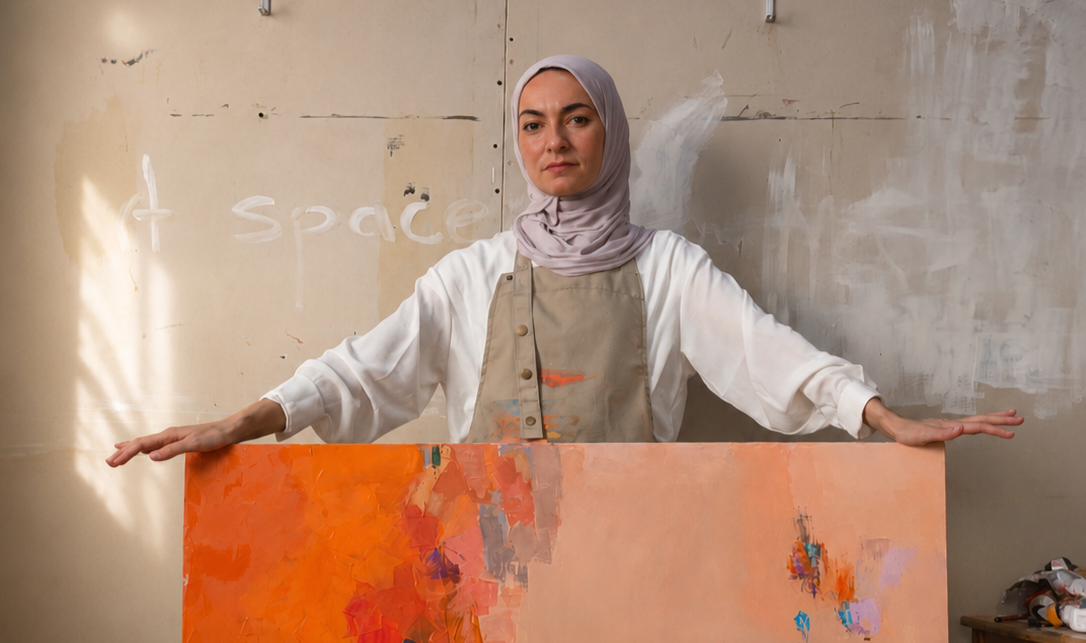
هذه المجموعة الجديدة، التي بدأت من خلالها ألاحظ هذه الأشكال المتكررة، سأشاركها قريبًا في إطلاق خاص للمشتركين في موقعي. وربما تكون هذه المرة الأولى التي ترون فيها هذه اللغة البصرية الجديدة التي بدأت تتشكل في أعمالي، قبل أن أكون أنا نفسي واعية تمامًا بأنها كانت تتشكل.
I will soon be sharing this new collection, the one through which I first began noticing these recurring shapes, in an exclusive release for my website subscribers. It may be the first time you see this new visual language taking shape in my work—perhaps even before I fully realized that it was taking shape myself.