أحيانًا أدخل المرسم وكأنني داخلة على حرب. حرب ناعمة ولطيفة، طبعًا. أنا واللوحة في جهة، وباقي العالم في الجهة الثانية… مع أنني بصراحة لست متأكدة دائمًا من أي جهة أنا أصلًا.
Sometimes I walk into my studio as if I’m walking into a battle. A soft, gentle battle, of course. Me and the painting on one side, and the rest of the world on the other… although, honestly, I’m not always sure which side I’m on.
ولا تتخيلوا أنني أدخل المرسم كما تظهر حياة الفنانين في الأفلام. لا موسيقى هادئة في الخلفية، ولا كوب قهوة موضوع بعناية بجانب اللوحة، ولا أنا أقف أمام القماش وأقول: "آه… لقد أتتني الفكرة." لا. أحيانًا أدخل وأبدأ مباشرة، وأحيانًا أدخل ولا أفعل شيئًا. وأحيانًا أدخل وأنا مقتنعة أنني سأعمل اليوم بشكل رهيب، وبعد ساعتين أكتشف أنني رتبت شيئًا، ونظفت شيئًا، ونقلت شيئًا من مكانه إلى مكان آخر… واللوحة؟ تنظر إليّ من بعيد وكأنها تقول: "خلصتي؟ ولا لسه؟"
And don’t imagine that I walk into my studio the way artists are usually portrayed in movies. There’s no soft music playing in the background, no perfectly placed cup of coffee next to the canvas, and definitely no moment where I stand dramatically in front of the painting and say, “Ah… the idea has arrived.”
No.
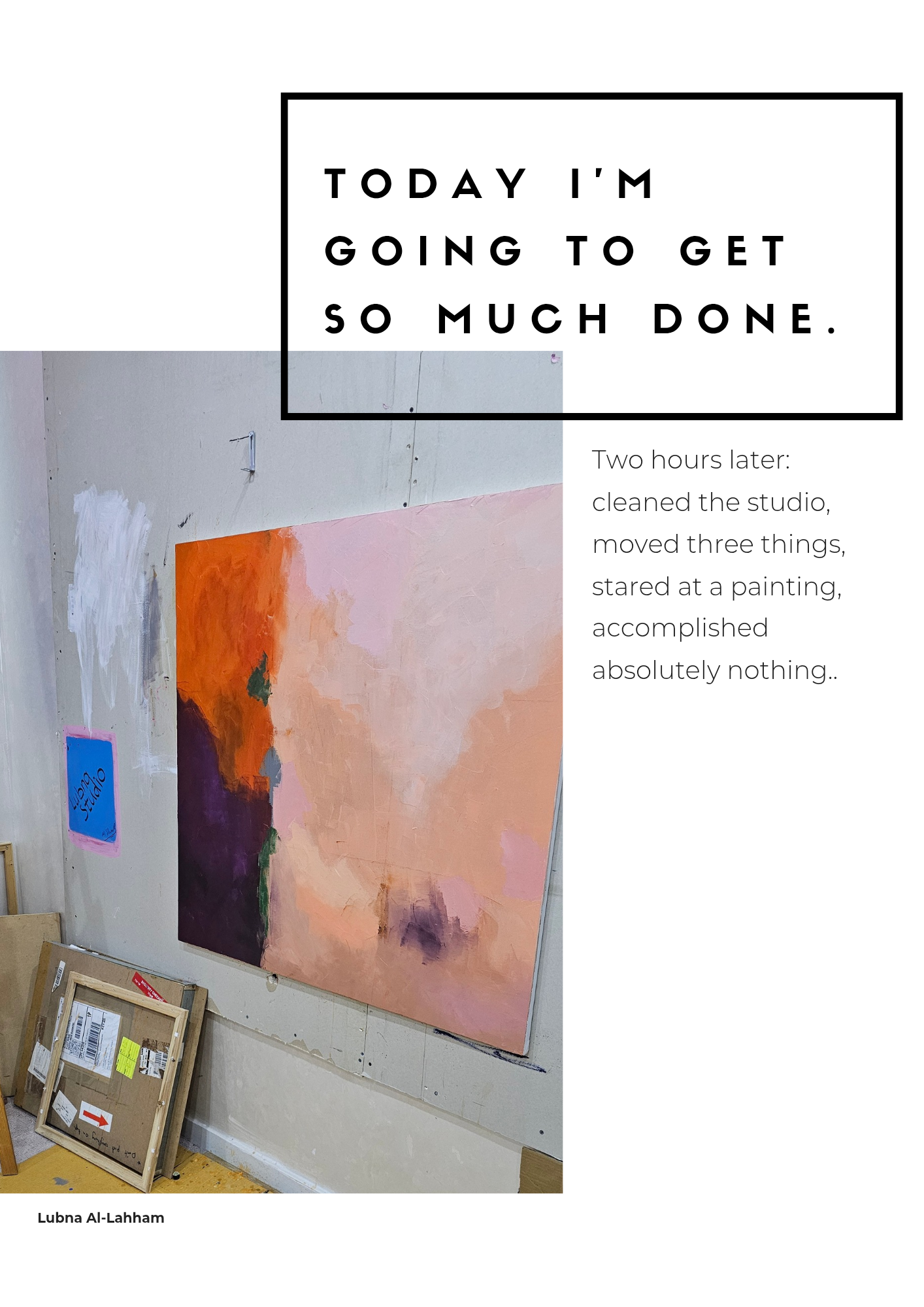
Sometimes I walk in and start painting immediately. Sometimes I walk in and do absolutely nothing. And sometimes I walk in completely convinced that I’m going to get so much done that day, only to realize two hours later that I’ve organized something, cleaned something, moved something from one place to another… and the painting?
It looks at me from across the room as if to say, “Are you done yet?”
وهذا جزء من علاقتي الطويلة بالفن.
And somehow, this is part of my long-term relationship with art.
أنا أحبه. أحبه فعلًا. أحب اللحظة التي أضع فيها اللوحة على الحائط وأشعر أنها جمّلت المكان، وكأن الحائط كان ينتظرها منذ البداية. وأحب أكثر تلك اللحظات الصغيرة التي لا علاقة لها باللوحة أصلًا، مثل طفل صغير يسألني: "أنتِ شو بتعملي؟" فأقول له: "أنا فنانة." فينظر إليّ وكأنني أخبرته أنني أعمل في ناسا: "واو… يعني أنتِ بترسمي؟"
نعم. أرسم. وهذه الـ"واو" تحديدًا تجعلني أحيانًا أشعر أن كل هذه الفوضى تستحق.
I love it. I really do. I love that moment when I place a painting on the wall and suddenly feel that it has made the whole space more beautiful, as if the wall had been waiting for it all along. But I love the little moments that have nothing to do with the painting just as much. Like when a child asks me, “What do you do?” - “I’m an artist.” And they look at me as if I’ve just told them I work for NASA.
“Wow… so you actually paint?”
Yes. I paint.
And that little “wow” sometimes makes me feel like all this beautiful chaos is completely worth it.
لأنني أحب أن يعرف الطفل أن الفن ليس شيئًا يفعله "الفنان الكبير" فقط بينما هو يقف متفرجًا. أحب أن أعلمه كيف يرسم شيئًا، ثم أراه يكتشف أن الموضوع أبسط مما كان يعتقد. يمكنه أن يجرب، أن يخرب، أن يرسم شيئًا لا يشبه أي شيء، ثم يقول بثقة: "هاي شجرة." وأنا، كفنانة محترفة، أقول له: "طبعًا. شجرة ممتازة."
Because I love the idea that a child can see art as something they can actually do, not something that belongs only to “grown-up artists” while they stand on the outside looking in.
I love teaching a child how to draw something and watching them realize that it’s actually much simpler than they thought. They can try, make a mess, draw something that looks like absolutely nothing, and then confidently say, “This is a tree.”
And me, as a professional artist, say, “Of course. Excellent tree.”
لأنني أعرف جيدًا أن الفنان الحقيقي ليس من يرسم كل شيء بشكل صحيح. الفنان الحقيقي هو من يستطيع أن يقنع الآخرين بأن ما رسمه كان مقصودًا. وهذه مهارة تعلمتها مبكرًا جدًا.
Because I’ve learned that a real artist isn’t necessarily someone who gets everything right.
A real artist is someone who can convince everyone else that whatever happened was intentional.
And that is a skill I learned very early.
لكن الفن، مثل أي علاقة، عنده أيامه
But Like Any Relationship, Art Has Its Days
أحيانًا يكون كل شيء مثاليًا. الفكرة واضحة، الألوان موجودة، الفرش نظيفة، وأنا مستعدة للعمل. وهنا تحديدًا يجب أن أقلق، لأن شيئًا ما سيحدث.
Sometimes everything is perfect. The idea is clear, the colors are there, the brushes are clean, and I’m ready to work. And that is exactly when I should start worrying, because something is about to go wrong.
قد أبدأ الرسم، وبعد قليل أكتشف أن اللون الذي أحتاجه انتهى. ليس أي لون، طبعًا. اللون الذي أحتاجه الآن. في هذه اللحظة بالذات. لأن الألوان، مثل البشر، لديها قدرة غريبة على اختيار أسوأ توقيت ممكن للمغادرة.
I might start painting, only to realize a little later that the exact color I need has run out. Not just any color, of course. The color I need right now. At this exact moment.
Because colors, much like people, have a strange talent for leaving at the worst possible time.
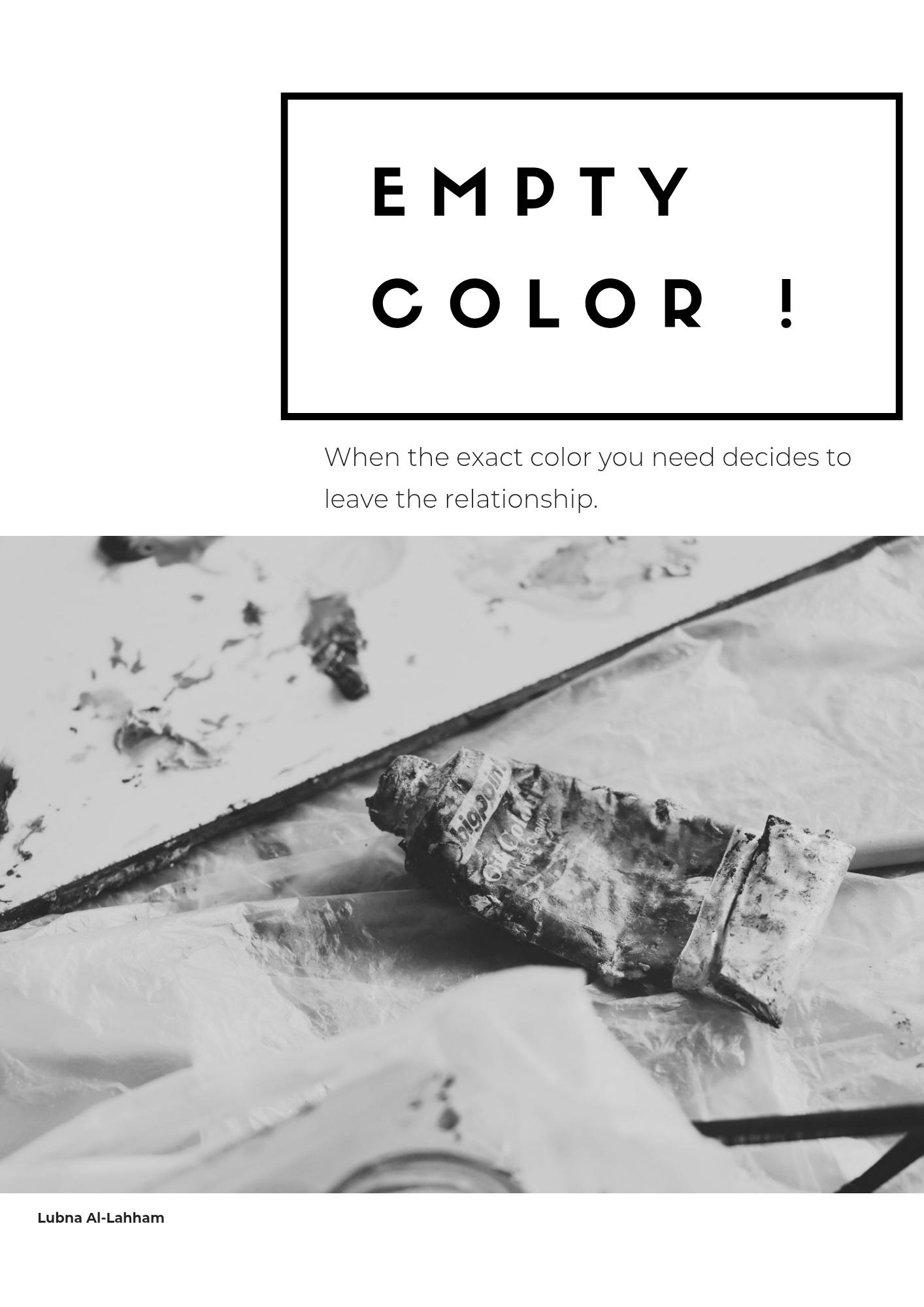
أقف أمام الباليتة وأبدأ مفاوضات داخلية: "طيب… شو ممكن أستخدم بدل هذا اللون؟" وأبدأ أجرب. أخلط لونين، ثلاثة، أربعة، ثم أكتشف أنني لم أصنع اللون الذي أريده، بل صنعت لونًا جديدًا لا أعرف من أين جاء ولا لماذا قرر الظهور في حياتي.
So I stand in front of my palette and begin negotiating with myself: “Okay… what can I use instead?”
I start mixing. Two colors, three, four… and eventually realize that I haven’t made the color I wanted at all. I’ve created an entirely new color that I have no idea where it came from or why it suddenly decided to enter my life.
وأحيانًا المشكلة ليست اللون. أحيانًا تكون المادة التي أريدها غير موجودة أصلًا. وهنا أكتشف أن جزءًا كبيرًا من كونك فنانًا هو أن تكون قادرًا على حل مشاكل لم تكن موجودة قبل خمس دقائق.
And sometimes the problem isn’t the color. Sometimes the material I need simply isn’t there.
That’s when I realize that a surprisingly large part of being an artist is solving problems that did not exist five minutes ago.
وهذا يفسر لماذا أصبحت أحب تبسيط الأمور. ليس لأنني شخص بسيط جدًا بطبيعتي، بل لأنني لو قررت أن أعقّد كل مشكلة صغيرة في المرسم، لن أنتهي من لوحة واحدة.
Which probably explains why I’ve learned to keep things simple. Not because I’m naturally a very simple person, but because if I decided to overthink every little problem in the studio, I’d never finish a single painting.
ثم نصل إلى مرحلة: اللوحة والكرامة
Then We Get to the Painting-and-Dignity Stage
هناك أيام تكون فيها اللوحة ممتازة، وهناك أيام تكون فيها اللوحة… لديها وجهة نظر مختلفة.
Some days the painting is going perfectly. And some days… the painting has a different opinion.
أبدأ وأنا أعرف تمامًا ماذا أريد. أعمل عليها، أضيف، أعدل، ثم أنظر إليها. لا. شيء ما ليس صحيحًا. أعدل مرة أخرى. لا. ما زالت لا تعجبني. أضيف شيئًا، ثم شيئًا آخر، ثم أكتشف أنني دخلت في علاقة عاطفية مع لوحة لا تعرف أصلًا كيف ترد عليّ.
I start knowing exactly what I want. I work on it, add something, adjust something, and then step back.
No.
Something is wrong.
So I adjust it again.
No.
Still not right.
I add something else, then another thing, and suddenly I realize I’m emotionally involved with a painting that doesn’t even know how to communicate back.
وفي هذه المرحلة، يعتمد كل شيء على مزاجي. أحيانًا أعاندها. أظل أحاول وأحاول حتى تضبط. وأحيانًا أقرر أنني سأكون الإنسان الأكثر نضجًا في هذه العلاقة، فأتركها وأبدأ لوحة ثانية، ثم أعود إليها لاحقًا.
At this point, everything depends on my mood.
Sometimes I fight back. I keep working and working until the painting finally starts behaving.
Other times, I decide to be the mature person in this relationship. I leave it alone, start another painting, and come back to it later.
أحيانًا ينجح هذا الحل، وأحيانًا لا. وأحيانًا أعود وأنا مقتنعة أنني سأحل المشكلة خلال خمس دقائق. أقف أمامها، أنظر إليها، ثم هي تنظر إليّ، وأعرف فورًا أن الخمس دقائق كانت فكرة ساذجة جدًا.
Sometimes this works. Sometimes it doesn’t.
And sometimes I come back convinced that I’ll solve the problem in five minutes. I stand in front of it, look at it, and then it looks back at me.
And I immediately realize that the five-minute plan was extremely optimistic.
وفي بعض الأحيان… اللوحة تفوز. نعم، أعترف. هناك لوحات هزمتني.
And sometimes… the painting wins.
Yes, I admit it. There have been paintings that defeated me.
لكن الغريب أن الموضوع لا ينتهي دائمًا هنا، لأن بعض اللوحات التي أبدأها وأنا متأكدة تمامًا من أنها ستكون رائعة، تنتهي بطريقة لا تعجبني إطلاقًا. وأحيانًا أنظر إليها وأقول: "خلص." وأزيلها بكل بساطة.
But the strange thing is, it doesn’t always end there.
Some paintings I start completely convinced that they’re going to be amazing end up becoming… not amazing at all.
Sometimes I look at one and simply think, “Okay. Enough.”
And I remove it.
No dramatic farewell. No funeral. We move on.
ثم تأتي المفارقة. لوحة أخرى أبدأها تقريبًا من لا شيء، ومن دون توقعات كبيرة، تصبح واحدة من اللوحات التي أحبها أكثر.
And then comes the irony.
Another painting might start almost from nothing, with very little expectation, and somehow become one of my favorites.
وهذه من أكثر الأشياء التي تجعلني أحب الرسم: أنك تستطيع أن تدخل وأنت تظن أنك تعرف كل شيء، ثم تخرج من اللوحة بشيء لم يكن موجودًا أصلًا في رأسك.
That is one of the things I love most about painting: you can walk in thinking you know exactly what you’re doing, and walk out with something that didn’t even exist in your head when you started.
أحيانًا أشعر أنني لا أرسم اللوحة وحدي. أنا أبدأ الحوار فقط. وبعدها، على ما يبدو، اللوحة تحب أن تأخذ دورها في الحديث.
Sometimes I feel like I don’t really paint the painting alone.
I just start the conversation.
After that, apparently, the painting likes to have a say too.
وهناك أيضًا الأيام التي لا يحدث فيها شيء
And Then There Are the Days When Nothing Happens
وهذه، بالمناسبة، كثيرة.
And there are quite a lot of those days, by the way.
أدخل المرسم وأنا أقول لنفسي: "اليوم رح أنجز." الجملة تبدو ممتازة. الحماس موجود، الخطة موجودة، وأنا موجودة. وبعد فترة… لا شيء.
I walk into the studio telling myself, “Today, I’m going to get so much done.”
It sounds like a great plan.
The motivation is there. The plan is there. I’m there.
And then, after a while…
Nothing.
قد أجلس فقط. أنظر إلى اللوحات، أفكر، أرتب شيئًا، أغير مكان شيء، ثم أجلس مرة أخرى. ولو دخل شخص في هذه اللحظة وسألني: "شو أنجزتي اليوم؟" قد أحتاج إلى لحظة صمت حتى أجد إجابة محترمة.
I might just sit there. Look at the paintings. Think. Organize something. Move something from one place to another. Then sit down again.
If someone walked in at that exact moment and asked, “So, what did you accomplish today?”
I might need a moment to come up with a respectable answer.
لكنني لا أعتبر هذه الأيام ضائعة. أحيانًا أنا فعلًا أحتاج فقط أن أكون في المرسم. أنظر، أتأمل، وأترك العين والعقل يعملان من دون أن أطلب من اليد أن تنفذ شيئًا فورًا.
But I don’t consider these days wasted.
Sometimes I genuinely just need to be in the studio. To look. To observe. To let my eyes and mind work without immediately asking my hands to produce something.
لأن العمل الفني لا يبدأ دائمًا عندما تضع أول لون على القماش. أحيانًا يبدأ قبل ذلك بكثير: في نظرة، في فكرة، في شيء صغير تراه ولا تعرف بعد لماذا لفت انتباهك.
Because making art doesn’t always begin when the first color hits the canvas.
Sometimes it starts much earlier: with a look, an idea, a small detail you notice without even knowing why it caught your attention.
وهذا الجزء من العمل لا يظهر في أي صورة. لا أحد سيشاهد صورة لفنانة جالسة في المرسم منذ ساعتين وهي تحدق في لوحة ويقول: "يا سلام… إنتاجية عالية." لكن أنا أعرف ماذا يحدث. على الأقل أعتقد أنني أعرف.
And this part of the work never shows up in a photograph.
No one is going to see a picture of an artist sitting in her studio for two hours staring at a painting and say, “Wow… look at that productivity.”
But I know what’s happening.
At least, I think I do.
الحياة الرومانسية للفنانة… حتى تصل إلى الفرش
The Romantic Life of an Artist… Until the Brushes Show Up
ثم هناك الجزء الذي لا يمكن أن نتجاهله: تنظيف الفرش.
And then there’s the part we simply cannot ignore: cleaning the brushes.
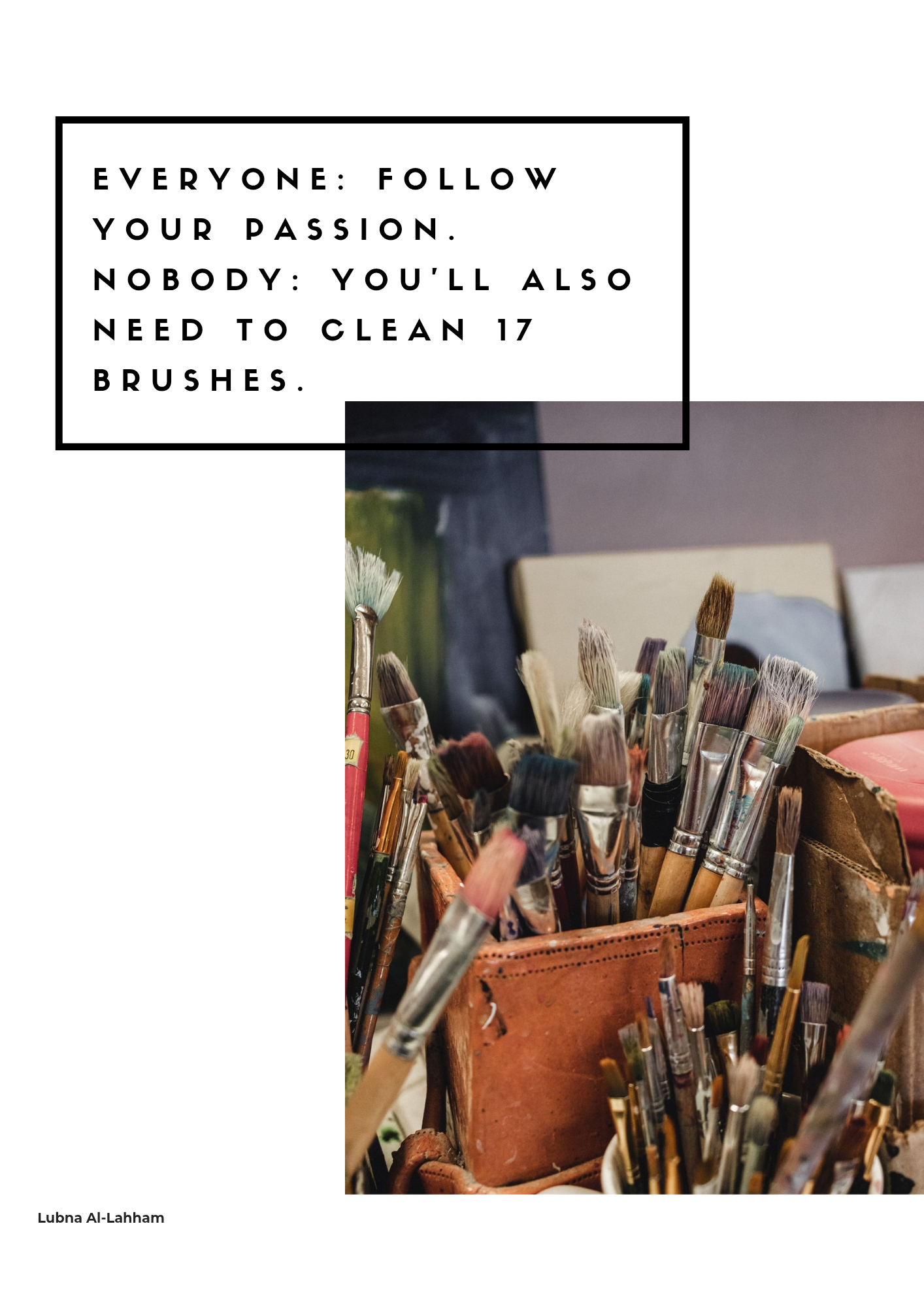
أعتقد أن هناك مؤامرة عالمية على الفنانين بخصوص هذه النقطة. كل الناس يقولون لك: "اتبع شغفك." ولا أحد يقول لك: "وبالمناسبة، بعد أن تتبع شغفك، ستحتاج إلى تنظيف سبع عشرة فرشاة."
I’m convinced there is a global conspiracy against artists when it comes to this.
Everyone tells you, “Follow your passion.”
No one tells you, “By the way, once you follow your passion, you’re going to have seventeen brushes to clean.”
أنا لا أحب تنظيف الفرش. أكررها بكل وضوح حتى لا يكون هناك أي سوء فهم: لا أحب تنظيف الفرش.
I don’t like cleaning brushes.
I’m repeating this very clearly so there’s no misunderstanding:
I do not like cleaning brushes.
وأعرف أنه يجب أن أفعل ذلك، وأفعله. لكن هل أستمتع به؟ لا. ولا حتى قليلًا.
I know I have to do it, and I do it.
But do I enjoy it?
No.
Not even a little.
وتنظيف الباليتة أيضًا من تلك المهام التي لا تحصل على أي تقدير. لا أحد يرى باليتة نظيفة ويقول: "يا لها من إنجاز فني." لكن دعوني أخبركم أن الوصول إلى باليتة نظيفة بعد سلسلة من اللوحات هو بحد ذاته مشروع.
Cleaning the palette is another one of those tasks that gets absolutely no appreciation.
No one looks at a clean palette and says, “What an artistic achievement.”
But let me tell you, getting a palette clean after a series of paintings is a project in itself.
وهكذا، بين لوحة وأخرى، أنتقل من فنانة إلى عاملة نظافة، ثم أعود فنانة. هذه هي الحياة.
So, somewhere between one painting and the next, I go from artist to cleaning lady and then back to artist again.
That’s the life.
الناس يرون اللوحة… وأنا أعرف القصة كاملة
People See the Painting… I Know the Whole Story
ربما لهذا السبب، عندما ينظر شخص إلى لوحة من لوحاتي، فأنا أراها بطريقة مختلفة تمامًا. هو يرى اللوحة، وأنا أرى القصة.
Maybe that’s why, when someone looks at one of my paintings, I see it very differently.
They see the painting, I see the story.
أرى كيف بدأت، ما الذي كنت أفكر فيه، متى شعرت أنها لا تسير بشكل صحيح، متى غيرت شيئًا، متى وقفت أمامها ولم أعرف ماذا أفعل، متى فاجأتني، ومتى قررت أخيرًا أنها انتهت.
I remember how it started, what I was thinking, when I felt something wasn’t working, when I changed something, when I stood in front of it with absolutely no idea what to do, when it surprised me, and finally, when I decided it was finished.
الناس لا يرون كل هذا، وهذا طبيعي. أنا أيضًا عندما أرى لوحة لفنان آخر، لا أعرف كل ما حدث خلفها. وأنا لست بحاجة لأن يعرف الناس كل ما حدث خلف لوحاتي. أنا أعرف، وهذا يكفيني.
People don’t see any of that, and that’s completely natural. When I look at another artist’s work, I don’t know everything that happened behind it either.
And I don’t need people to know everything that happened behind my paintings.
I know. And that’s enough for me..
لكن ربما هذا هو السبب الذي يجعل بعض اللوحات قريبة مني أكثر من غيرها. لأنني لا أتذكر فقط شكلها. أتذكر الوقت الذي قضيته معها.
Maybe that’s why some paintings feel closer to me than others.
I don’t just remember what they look like.
I remember the time I spent with them.
المشكلة الحقيقية: أنا أتعلق باللوحات
وهنا ندخل إلى الجزء الذي يجعل علاقتي بالفن أكثر تعقيدًا بقليل: أنا أبيع لوحاتي، وهذا جيد، بل ممتاز، لكن أحيانًا تكون اللوحة التي انباعت هي بالضبط اللوحة التي كنت متعلقة بها. فأفرح لأنها انباعت، ثم أزعل قليلًا، ثم أقول لنفسي: لا، المفروض أفرح، فأفرح مرة أخرى… ثم أفتح صورتها على هاتفي بعد فترة لأنني اشتقت لها. وهنا أشعر أنني أتصرف مثل شخص يحتفظ بصور حبيبته السابقة، مع فارق بسيط جدًا: أنا التي بعتها.
The Real Problem: I Get Attached to My Paintings
And here is where my relationship with art gets a little more complicated.
I sell my paintings, which is good. Very good, actually. But sometimes the painting that gets sold is exactly the one I was attached to.
So I’m happy it sold, then I get a little sad, then I remind myself that I’m supposed to be happy, so I’m happy again… and then, some time later, I open a photo of it on my phone because I miss it.
At this point, I feel like someone looking through pictures of an ex.
With one very important difference:
I’m the one who sold it.
وأحيانًا تكون هناك لوحة أشعر فعلًا أنها ليست للبيع. ثم يأتي شخص ويحبها ويريد شراءها، وهنا تبدأ المفاوضات الداخلية: "بس هاي بالذات…" ثم أتذكر أنها صنعت لكي تجد طريقها إلى شخص آخر، فأوافق، وأرسلها، وأودعها، ثم أفتح صورتها لاحقًا لأنني اشتقت لها.
Sometimes there’s a painting that I genuinely feel is not for sale. Then someone comes along, falls in love with it, and wants to buy it.
And that’s when the internal negotiations begin.
“But this one…”
Then I remind myself that it was made to eventually find its way to someone else.
So I agree. I send it. I say goodbye.
And then, later, I open a photo of it because I miss it.
الفنان، على ما يبدو، لديه قدرة غريبة على بيع شيء يحبه ثم الجلوس على الأطلال.
Apparently, artists have a strange ability to sell something they love and then sit among the ruins afterward.
لكنني في النهاية أؤمن أن هذا جزء من دورة الفن. اللوحة تخرج مني وتذهب إلى شخص آخر، وذلك الشخص يمنحها مكانًا جديدًا، وأنا أعود إلى المرسم وأبدأ شيئًا جديدًا. وهكذا تستمر الحكاية: لوحة أحبها، لوحة أبيعها، لوحة أشتاق إليها، ثم لوحة جديدة أبدأها من الصفر ولا أعرف إلى أين ستذهب.
But in the end, I believe this is part of the cycle of art.
A painting leaves me and goes to someone else. That person gives it a new place, and I return to the studio and start something new.
And so the story continues: a painting I love, a painting I sell, a painting I miss, and then a new painting I start from scratch without knowing where it will take me.
ماذا أعطاني الفن بالمقابل؟
إذا كنت سأكون عادلة في هذه العلاقة، فلا يمكنني أن أتحدث فقط عن اللون الذي ينتهي، والفرشاة التي تحتاج إلى تنظيف، واللوحة التي تقرر أن تهزمني. الفن أعطاني الكثير أيضًا. علّمني أنني أكثر صبرًا مما كنت أعتقد، وأن عندي طول بال كبيرًا جدًا، وأنني أستطيع أن أبسط الأمور بدل أن أعطي كل مشكلة حجمًا أكبر من اللازم. علّمني الهدوء، مع أنني، للمفارقة، أصبحت أكثر عنادًا أيضًا. أنا أصلًا عنيدة، لكن يبدو أن الفن قرر أن يدعم هذه الصفة بدل أن يحاول إصلاحها.
And What Has Art Given Me in Return?
If I’m going to be fair in this relationship, I can’t only talk about the color that runs out, the brushes that need cleaning, and the painting that decides to defeat me.
Art has given me a lot too. It taught me that I’m more patient than I thought I was. That I have a lot of patience, actually. And that I can simplify things instead of giving every little problem a much bigger role than it deserves.
It taught me calmness.
Although, ironically, it also made me more stubborn.
I was already stubborn, but apparently art decided to support this particular personality trait rather than try to fix it.
وفي الوقت نفسه، علّمني أن أتقبل الأفكار عندما تتغير، وأن أبدأ بشيء وأنتهي بشيء آخر من دون أن أشعر أنني فشلت. لأنني تعلمت أن اللوحة أحيانًا تعرف أين تريد أن تذهب أكثر مني. وهذا شيء جميل؛ أن لا تكوني مسيطرة على كل شيء طوال الوقت، وأن تتركي مساحة للمفاجأة، وأن تبدئي من لا شيء ثم تكتشفي أن "اللاشيء" كان لديه خطة أفضل منك.
At the same time, it taught me to accept it when ideas change. To start with one thing and end up somewhere completely different without feeling like I failed.
Because I’ve learned that sometimes the painting knows where it wants to go better than I do.
And there’s something beautiful about that.
Not being in control of everything all the time. Leaving room for surprises. Starting with nothing and discovering that the “nothing” actually had a better plan than you did.
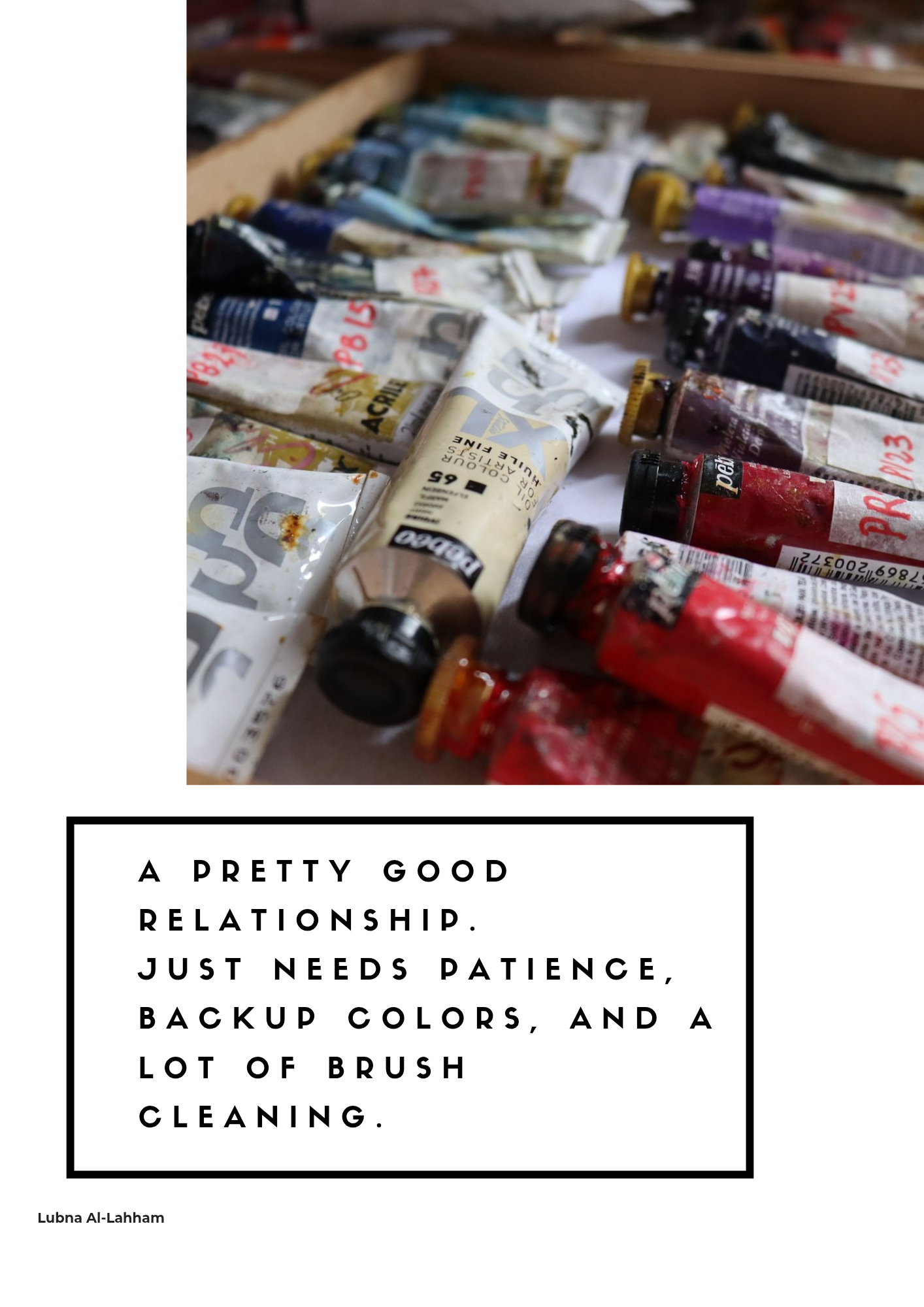
وبصراحة؟
بعد كل هذه السنوات، ما زلت أعتقد أن هذه علاقة جيدة جدًا. فقط… تحتاج إلى بعض الصبر، وبعض الألوان الاحتياطية، وكثير من تنظيف الفرش.
And Honestly?
After all these years, I still think this is a pretty good relationship.
It just needs a little patience, some extra colors on standby, and a whole lot of brush cleaning.